
Menu Engineering Services
A well-designed menu can influence what guests notice and what they order. It can also affect how they perceive value and how much revenue each visit generates.

Alias Creative provides data-driven menu engineering services that help restaurants, bars, hotels, and hospitality groups evaluate item performance, strengthen pricing, and make more informed decisions about menu composition and presentation.
Our work connects financial analysis with culinary strategy, restaurant operations, brand positioning, and guest experience.
The objective is not simply to redesign a menu, but to build a more effective system for improving profitability without compromising what makes the concept distinctive.
What Is Menu Engineering?
Menu engineering is the process of evaluating menu items according to both popularity and profitability. It helps restaurant operators understand which items drive performance, which require adjustment, and how pricing, placement, descriptions and menu composition may influence purchasing decisions.
A useful menu engineering analysis considers more than food cost percentage, typically examining:








These factors provide a clearer view of how each item contributes to the restaurant as a whole.
An item with a low food-cost percentage is not necessarily the most valuable if it rarely sells. Conversely, a popular item may generate substantial revenue while delivering less profit than its volume suggests. Menu engineering brings those distinctions into focus.
When Does a Restaurant Need Menu Engineering?
Menu performance problems are not always obvious.

A restaurant may have consistent traffic and strong sales while still losing potential profit through outdated prices, poor item placement, unnecessary complexity, or an unbalanced sales mix.
Menu engineering may be particularly valuable when:
>> Revenue is growing, but profit margins remain flat.
>> Food or beverage costs have increased.
>> Popular items produce weaker margins than expected.
>> High-margin items receive limited attention.
>> Guests find the menu difficult to navigate.
>> The concept has accumulated too many items.
>> Pricing has not kept pace with the market.
>> Waste or inventory costs are increasing.
>> A new menu, daypart, or location is being introduced.
>> Multiple locations produce inconsistent results.
>> Management lacks reliable item-level performance data.
>> The restaurant is preparing for a repositioning or rebrand.
Menu engineering can support both corrective and proactive decisions. It may help an established restaurant address declining performance, but it can also guide a successful concept before cost pressure or operational complexity becomes a larger problem.
Our Menu Engineering Services
A more profitable menu begins with understanding how each item performs and how pricing, placement, preparation, and guest demand shape the results.
At Alias Creative, our menu engineering experts tailor each engagement to the restaurant’s concept, goals, available data, service model, and competitive environment.
Menu Profitability and Popularity Analysis
We evaluate item-level performance based on sales volume and contribution margin, revealing how frequently each offering sells and how many dollars it contributes after its direct food or beverage costs.
Items are commonly grouped into the following four performance categories.
| Category | Performance | Recommended Strategy |
|---|---|---|
| Stars | High popularity, high profitability | Maintain visibility, quality, and consistency |
| Plowhorses | High popularity, lower profitability | Reassess portions, costs, pricing, or preparation |
| Puzzles | Lower popularity, high profitability | Strengthen placement, positioning, or descriptions |
| Dogs | Low popularity, low profitability | Rework, replace, or remove when appropriate |
These categories provide a useful framework, but they do not dictate an automatic response. Brand significance, guest expectations, kitchen execution, and broader menu balance must also inform the decision.
-
Food-cost percentage measures cost efficiency, but contribution margin reveals the actual dollars each item generates to support labor, overhead, and profit.
Alias reviews relevant cost and sales information to help operators understand:
Ingredient and portion cost
Selling price
Contribution margin
Sales frequency
Preparation and labor demands
Waste exposure
Ingredient cross-utilization
Operational burden
This analysis distinguishes items that appear efficient on a percentage basis from those that generate meaningful profit dollars and justify their operational demands.
-
Pricing should reflect costs, customer expectations, competitive conditions, and the experience surrounding the meal.
Our menu engineering consultants assess item economics, comparable concepts, and price relationships across the menu to help determine whether pricing:
Supports the restaurant’s financial objectives
Aligns with its market position and perceived value
Reflects portion sizes, specifications, and item economics
Establishes logical relationships among entry-level, core, and premium offerings
Remains credible within the competitive set
Supports profitable modifiers, bundles, and prix-fixe options
Accounts for differences among dine-in, delivery, event, and other menus
Leaves appropriate room for changing costs
Not every item warrants the same pricing strategy. A signature dish may require a different approach than an interchangeable side, an entry-level offering, or a limited-time feature.
The objective is not to copy competitors or indiscriminately raise prices. It is to establish a coherent pricing structure that supports profitability while preserving guest trust in the concept’s value.
-
A strong menu offers guests meaningful choice without creating unnecessary complexity.
To establish the right balance, we evaluate how the menu functions as a connected system, considering:
Category balance
Redundant offerings
Price-point distribution
Premium and entry-level options
Ingredient cross-utilization
Kitchen capacity
Preparation time
Dietary considerations
Opportunities for additions, pairings, or upgrades
This can reveal where the menu needs greater variety, where it has become overloaded, and where individual items may compete against one another.
-
Once the underlying item strategy is sound, design and language can help guests understand the menu and make decisions more confidently.
To that end, our recommendations may address:
Information hierarchy
Category order
Item placement
Visual emphasis
Naming conventions
Description clarity
Price presentation
Readability
Brand voice
Printed and digital formats
Design cannot rescue an unprofitable or poorly conceived menu. However, thoughtful presentation can make a well-engineered menu easier to navigate and more effective.
Beverage Menu Engineering
Beverage programs can materially influence check averages and profitability, but their cost structures, preparation demands, purchasing patterns, and guest behaviors warrant dedicated analysis.

Alias Creative can evaluate beverage menus across:
>> Cocktails
>> Wine
>> Beer
>> Spirits
>> Nonalcoholic drinks
>> Coffee and tea
>> Specialty beverages
>> Banquet and event packages
A beverage menu engineering engagement may:
Analyze sales mix, pour cost, preparation time, pricing, and category balance.
Identify opportunities for premium upgrades, pairings, and profitable modifiers.
Evaluate whether the program supports the concept’s identity and market position.
Align the beverage list with the food menu, service style, occasion, and guest expectations.
For hotel restaurants, bars, and multi-outlet properties, this analysis can extend across venues and dayparts to identify overlap, inconsistencies, and opportunities for a more coordinated food-and-beverage strategy.
Menu Engineering Across Dayparts, Locations, and Sales Channels
A menu may perform differently depending on where, when, and how guests encounter it. Breakfast customers may behave differently from dinner guests; delivery ordering patterns may differ from dine-in behavior; and an effective menu in one location may underperform elsewhere because of differences in audience, competition, pricing, or execution.
Alias can segment menu analysis by:




This segmented approach can prevent high-level averages from concealing important differences.
For multi-location groups, it can also help determine which elements should remain consistent and where local adaptation may be appropriate. The goal is to establish greater visibility and control without forcing every operation into an inflexible model.
How Our Menu Engineering Process Works
Alias Creative combines rigorous analysis with real-world restaurant expertise to identify opportunities, prioritize decisions, and translate strategy into practical menu improvements. Our five-stage process keeps each recommendation grounded in the restaurant’s financial performance, operational realities, brand, and guest experience.
-
We begin by understanding the concept, target guest, menu structure, operational model, and business objectives.
This assessment draws on relevant inputs such as sales reports, recipes, item costs, current pricing, competitive positioning, guest feedback, and existing menu formats.
-
We evaluate menu performance by combining popularity, contribution margin, cost, and operational considerations.
Where appropriate, the analysis is segmented by category, daypart, location, or sales channel.
-
We identify priorities and develop recommendations for pricing, item composition, placement, descriptions, design, and operational execution.
Each recommendation is considered in relation to the concept, not as an isolated financial adjustment.
-
Alias can help translate the strategy into updated menu architecture, written descriptions, design direction, launch planning, and team communication.
When broader support is needed, our integrated capabilities include restaurant consulting, branding, marketing, photography, and creative execution.
-
Menu engineering is most effective as an ongoing discipline.
After implementation, operators should review sales mix, contribution margin, guest response, food cost, and operational performance to determine whether the changes are producing the intended results.
What a Menu Engineering Engagement May Deliver
The specific deliverables depend on the restaurant’s objectives, available data, and scope of work. With that, an engagement may include:
Item-performance and contribution-margin analysis
Menu engineering classifications and opportunity priorities
Pricing and competitive-market recommendations
Item, category, and menu-composition recommendations
Placement, naming, and description guidance
Beverage-program analysis
Implementation priorities and measurement benchmarks
Recommendations are organized around what should change, why it matters, and how the restaurant can put the strategy into practice.
Menu Engineering Results: The Brasserie
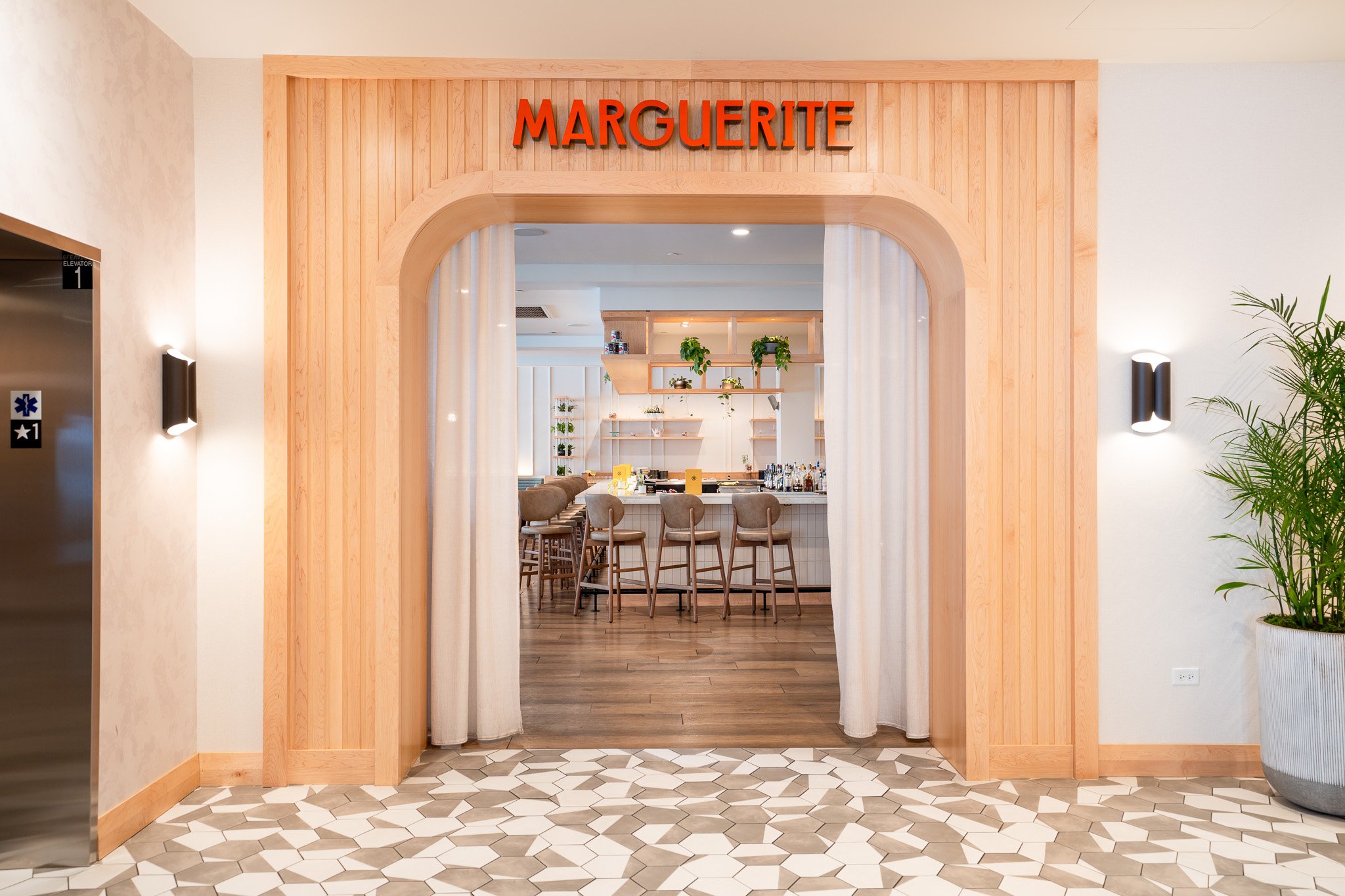
Alias applied menu engineering and competitive pricing strategies to The Brasserie, a 150-seat, upscale restaurant generating approximately $6 million in annual revenue.
Although the restaurant maintained steady traffic and a loyal customer base, performance varied considerably among menu items. Per-table spending and overall profitability were below the levels its steady traffic and loyal customer base should have supported.
Alias analyzed sales, cost of goods sold, item popularity, pricing, and competitive conditions.
The resulting strategy included:
>> Categorizing items according to popularity and profitability
>> Repositioning high-margin opportunities
>> Revising selected menu descriptions
>> Adjusting prices strategically
>> Reworking or removing weaker items
>> Introducing bundling and prix-fixe opportunities
>> Increasing ingredient cross-utilization
>> Establishing a process for recurring menu reviews
The results are presented in the table below.
| Performance Area | Documented Result |
|---|---|
| Average revenue per table | Increased 15% |
| Overall profit margins | Improved 12% |
| Inventory costs | Reduced 9% |
The engagement demonstrates what menu engineering can accomplish when data, pricing, design and operations are evaluated together.
Who We Work With
Alias Creative provides menu engineering and related food-and-beverage consulting for concepts at different stages of development and growth.
Our work can support:
- Independent restaurants
- Chef-driven concepts
- Bars and lounges
- Hotel restaurants
- Resorts and hospitality properties
- Restaurant groups
- Multi-location operators
- Franchise organizations
- Private clubs
- Entertainment and event venues
- Developers launching new concepts
- Investors evaluating restaurant performance
The scope may focus exclusively on one menu or form part of a broader restaurant consulting, brand-development, photography, public relations, or operational engagement.
That flexibility allows Alias to address the immediate menu challenge while accounting for the larger business behind it.
Why Restaurants Choose Alias for Menu Engineering
Menu engineering sits at the intersection of finance, culinary strategy, operations, branding and guest experience. Focusing on only one of those areas can produce recommendations that look persuasive in a spreadsheet but fail in practice.
Alias brings those disciplines together, allowing us to evaluate not only what the numbers reveal but how each recommendation will affect the restaurant as a whole.
Our approach is informed by executive-level food-and-beverage leadership and deep experience with high-volume hospitality operations, including (but not limited to) the following:





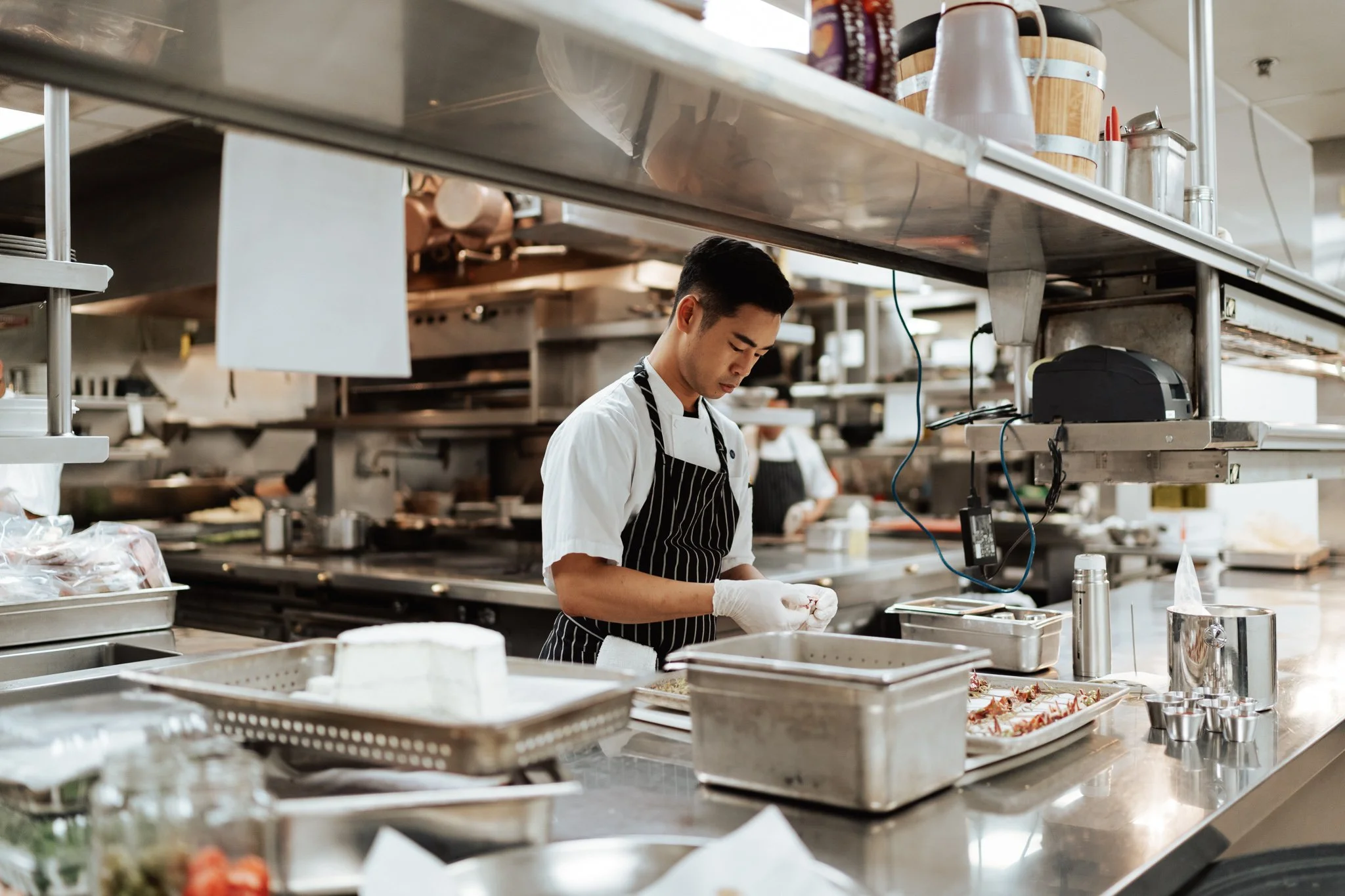
This integrated perspective can help ensure that menu decisions support more than short-term margin improvement. They must also make sense for the kitchen, the team, the guest and the brand.
Alias has supported restaurants and hospitality organizations associated with Waldorf Astoria, Kimpton Hotels, Virgin Hotels and other recognized brands. Our experience enables us to evaluate both the details of item-level performance and the broader strategic role the menu plays within the concept.







Menu Engineering FAQs
-
A menu engineering consultant evaluates the popularity, cost, contribution margin, positioning, and operational requirements of menu items.
The consultant uses that information to recommend changes to pricing, menu composition, item placement, descriptions, design, or preparation. The objective is to improve menu performance while supporting the restaurant’s concept and guest experience.
-
No. Menu design focuses primarily on how the menu looks and how information is presented.
Menu engineering begins with performance data, including item popularity and profitability. Design may then be used to support the resulting strategy. An attractive menu is valuable, but visual changes should be grounded in sound financial and operational decisions.
-
Menu engineering can help improve profitability by identifying opportunities to:
Promote high-contribution items
Adjust underpriced offerings
Rework costly popular items
Increase sales of profitable but overlooked items
Remove unnecessary complexity
Reduce waste
Improve ingredient cross-utilization
Strengthen upselling and pairing opportunities
Results vary according to the restaurant, its menu, operating conditions, and the changes implemented.
-
The strongest analysis typically covers item-level sales data, recipes or ingredient costs, selling prices, and operational context.
Additional information may include labor requirements, waste, guest feedback, competitive pricing, sales by daypart, and differences among locations or channels.
If some information is incomplete, the first step may be improving the underlying data.
-
Restaurants should review menu performance regularly and whenever material conditions change.
A comprehensive review may be appropriate after:
Significant cost increases
A change in leadership
A decline in margins
The introduction of a new daypart
A rebrand
An expansion.
Many restaurants also benefit from scheduled reviews several times per year, with the exact frequency determined by menu size, seasonality, and operating model.
-
Yes. A pre-opening menu may not have historical sales data, but pricing, cost structure, category balance, competitive positioning, and operational complexity can still be evaluated.
After launch, actual sales and contribution-margin data can be used to refine the menu based on demonstrated guest behavior.
-
Yes. Alias can analyze cocktail, wine, beer, spirits, nonalcoholic, and other beverage categories.
The review may address pour cost, sales mix, pricing, preparation, category balance, premium upgrades, food pairings, and alignment with the concept.
-
Yes. Depending on the engagement, Alias can support menu architecture, copy, design direction, food-and-beverage strategy, branding, marketing, photography, launch planning, and broader operational execution.
Turn Your Menu Into a Stronger Business Asset
The most effective menus balance what guests want with what the operation can execute and what the business needs to earn.
Menu engineering provides the structure required to make those decisions with greater confidence. It transforms the menu from a list of offerings into a measurable tool for pricing, profitability, positioning, and guest experience.
Alias Creative helps restaurants and hospitality organizations identify where value is being created, where performance is being lost, and what changes can produce a stronger menu and a healthier business.
Contact our menu engineering consultants to uncover opportunities, prioritize the right improvements, and build a menu strategy that supports stronger performance.